In cryptocurrency trading and investing, most beginners focus only on price. However, experienced traders know that price alone is not enough to understand a market. Two of the most critical yet often overlooked factors are liquidity and trading volume.
These concepts determine how stable a market is, how easily you can enter or exit a trade, and how much risk is involved. Ignoring them can lead to serious losses, especially in volatile crypto markets.
In this guide, we will break down liquidity and volume in depth, explain how they work, how they affect price movements, and how you can use them to make smarter trading and investment decisions.
What is Liquidity in Crypto?
Liquidity refers to how easily a cryptocurrency can be bought or sold without significantly affecting its price.
A market is considered highly liquid when there are many buyers and sellers actively trading. In such markets, transactions happen quickly and with minimal price change.
On the other hand, low liquidity means fewer participants, making it harder to execute trades without causing large price fluctuations.
In simple terms:
Liquidity = how smoothly money flows in and out of a market.
What is Trading Volume?
Trading volume represents the total number of coins traded within a specific period, usually 24 hours.
High volume indicates strong market activity and interest, while low volume suggests weak participation.
Volume is often used as a confirmation tool:
- Rising price + high volume = strong trend
- Rising price + low volume = weak trend
Difference Between Liquidity and Volume
Although related, liquidity and volume are not the same.
- Volume shows how much trading is happening
- Liquidity shows how easily trades can happen
A market can have high volume but still face liquidity issues if orders are not evenly distributed.
Understanding both together gives a clearer picture of market health.
Why Liquidity Matters in Crypto
Liquidity plays a crucial role in determining risk and stability.
1. Smooth Transactions
In high liquidity markets, you can buy or sell assets instantly without major price changes.
2. Lower Risk
Low liquidity markets are more volatile and easier to manipulate.
3. Accurate Pricing
High liquidity ensures that prices reflect real market demand and supply.
What Happens in Low Liquidity Markets
Low liquidity can create several problems:
- Large price swings
- Difficulty in exiting trades
- Increased chances of manipulation
- High slippage (unexpected price changes during execution)
For example, if you try to sell a large amount of a low-liquidity coin, the price may drop sharply because there are not enough buyers.
Understanding Order Books (Advanced Concept)
An order book shows all buy and sell orders for a cryptocurrency.
- Buy orders (bids) → demand
- Sell orders (asks) → supply
A strong order book with many orders at different price levels indicates good liquidity.
A weak order book means fewer participants and higher risk.
What is Slippage?
Slippage occurs when the price at which your order is executed is different from the expected price.
This usually happens in low liquidity markets.
Example:
You place a buy order at $100, but it executes at $105 due to lack of sellers.
High liquidity reduces slippage significantly.
Liquidity Providers and Market Makers
Liquidity in crypto markets is often supported by:
- Market makers → provide continuous buy/sell orders
- Liquidity providers → supply funds in exchanges or DeFi platforms
In decentralized finance (DeFi), users can provide liquidity to pools and earn rewards.
However, this also comes with risks like impermanent loss.
Volume Analysis in Trading
Volume is a powerful tool for understanding market behavior.
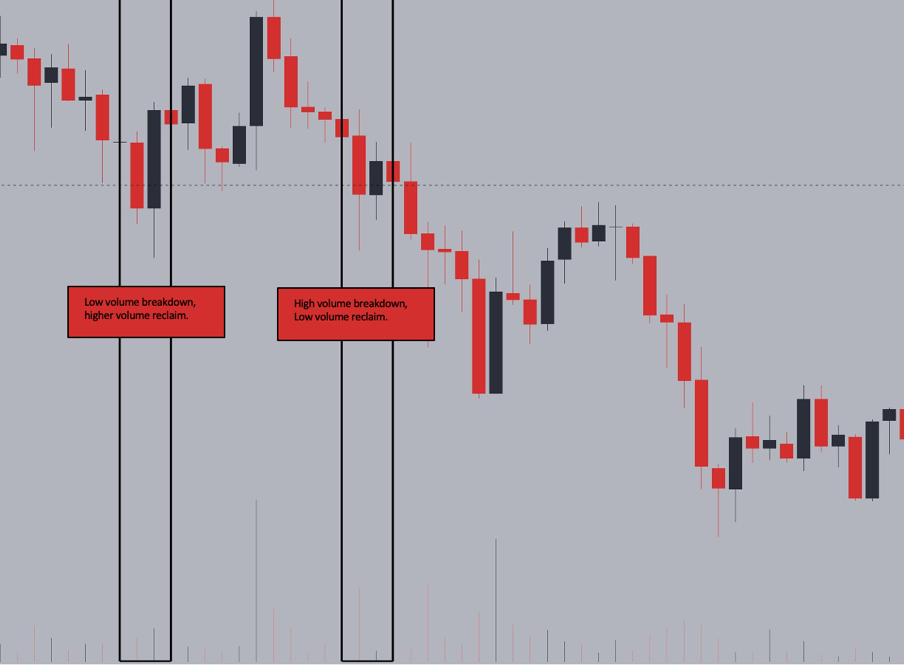
1. Breakout Confirmation
When price breaks a resistance level with high volume, it indicates strong momentum.
2. Trend Strength
Strong trends are supported by consistent volume.
3. Reversals
Sudden spikes in volume can signal trend reversals.
Fake Volume (Hidden Risk)
Not all volume is real. Some exchanges inflate trading volume using bots.
This is called wash trading.
Signs of fake volume:
- Unrealistically high volume on unknown exchanges
- Low liquidity despite high volume
- Large spreads between buy and sell prices
Always rely on trusted platforms for accurate data.
Liquidity in Centralized vs Decentralized Exchanges
Centralized Exchanges (CEX)
- Example: Binance
- High liquidity
- Faster execution
Decentralized Exchanges (DEX)
- Example: Uniswap
- Liquidity depends on pools
- Higher risk but more control
Understanding this difference helps you choose the right platform.
How to Check Liquidity and Volume
You can analyze these metrics using:
- CoinMarketCap
- CoinGecko
- Exchange order books
- TradingView charts
Key things to check:
- 24h trading volume
- Bid-ask spread
- Market depth
Practical Strategy for Beginners
Before investing or trading, always:
- Choose coins with high liquidity
- Avoid unknown low-volume tokens
- Check volume trends before entering trades
- Use limit orders to reduce slippage
This reduces risk and improves execution.
Common Mistakes
Beginners often:
- Ignore liquidity completely
- Trade low-volume coins for quick gains
- Fall into pump-and-dump schemes
- Misinterpret volume signals
These mistakes can lead to heavy losses.
Why Smart Traders Focus on Liquidity
Professional traders prioritize liquidity because it allows them to:
- Enter and exit positions easily
- Manage risk effectively
- Trade large amounts without affecting price
Liquidity is what separates a tradable market from a risky gamble.
FAQs
What is good liquidity in crypto?
High number of buyers and sellers with tight price spreads.
Is high volume always good?
Usually yes, but it must be real and supported by liquidity.
What is slippage in crypto?
Difference between expected and actual trade price.
Can low liquidity coins be profitable?
Yes, but they are highly risky.
Where can I check volume?
On CoinMarketCap, CoinGecko, and exchanges.
Conclusion
Liquidity and trading volume are essential concepts that every crypto investor and trader must understand. They determine how stable a market is, how easily trades can be executed, and how much risk is involved.
Ignoring these factors can turn even a good investment into a bad decision. On the other hand, mastering them gives you a strong advantage in navigating the crypto market.
In crypto, it’s not just about what you buy—it’s about where and how you trade it.