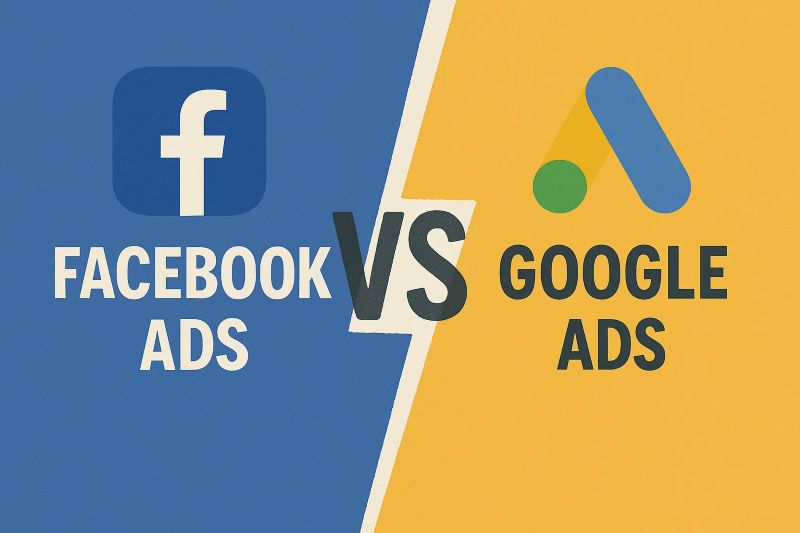
If you’re planning to run paid ads in 2026, you’ll eventually face the same question every marketer does:
Should I use Google Ads or Facebook Ads?
Both platforms are powerful, both are widely used, and both can generate sales. But they work in very different ways—and choosing the wrong one can waste a lot of budget.
The truth is, there is no universal “best” platform. The right choice depends on your business model, audience behavior, and goals.
Let’s break it down in a practical way.
Understanding the Core Difference
Before comparing performance, you need to understand one simple idea:
- Google Ads = Intent-based marketing
- Facebook Ads = Interest-based marketing
This difference changes everything.
On Google, people are actively searching for something:
- “buy running shoes online”
- “best SEO services”
- “affordable web hosting”
They already have intent. You’re just placing your offer in front of them at the right moment.
On Facebook (and Meta platforms), people are not searching. They’re scrolling:
- watching videos
- engaging with posts
- browsing casually
Your ad interrupts their attention.
Both approaches work—but they work differently.
Google Ads: High Intent, High Competition
Google Ads is powerful because it targets users who already know what they want.
Advantages:
- high purchase intent traffic
- better conversion rates
- strong for urgent needs (services, products)
- scalable for businesses with clear demand
Challenges:
- competitive keywords can be expensive
- requires proper keyword strategy
- poor setup can burn budget quickly
In simple terms:
Google Ads works best when people are already looking for your solution.
Facebook Ads: Discovery and Attention-Based Marketing
Facebook Ads work differently. You’re not capturing demand—you’re creating it.
Advantages:
- strong targeting options (interests, behavior, demographics)
- cheaper clicks in many niches
- great for brand awareness
- ideal for visual products and storytelling
Challenges:
- lower immediate purchase intent
- requires strong creatives (images/videos matter a lot)
- audience needs more nurturing
Facebook Ads are often better for introducing people to something new.
Which One Has Better ROI?
This is where most people expect a simple answer—but it depends.
Google Ads tends to perform better when:
- you sell services (SEO, consulting, repairs)
- customers are actively searching
- your product solves an immediate problem
Facebook Ads tends to perform better when:
- you sell lifestyle products
- your brand needs awareness
- you rely on emotional or visual appeal
So ROI is not about the platform itself—it’s about matching the platform to user behavior.
Cost Comparison: Where Do You Spend Less?
In general:
- Google Ads → higher cost per click, but higher conversion intent
- Facebook Ads → lower cost per click, but weaker intent
This means:
- Google often brings fewer but more serious buyers
- Facebook brings more traffic, but less immediate conversion
So cheap traffic doesn’t always mean better ROI.
Ad Creatives: The Real Deciding Factor
One thing many beginners ignore is this:
👉 Your ads matter more than the platform.
On Facebook:
- visuals, hooks, and storytelling decide performance
On Google:
- ad copy, keywords, and landing page quality matter more
Even the best platform won’t fix weak creative.
Funnel Strategy: The Smart Approach
In 2026, most successful marketers don’t choose one platform—they combine both.
A simple funnel looks like this:
- Facebook Ads → awareness
- Retargeting → engagement
- Google Ads → conversion
This approach covers both:
- attention (Facebook)
- intent (Google)
It creates a full system instead of relying on one channel.
Common Mistakes Beginners Make
A few patterns often lead to wasted budget:
- running ads without clear targeting
- not testing creatives properly
- sending traffic to weak landing pages
- expecting instant sales without optimization
Paid ads are not “set and forget.” They require testing and adjustment.
Which One Should You Start With?
If you are a beginner:
- Start with Facebook Ads if you want to test ideas and build awareness
- Start with Google Ads if you already know people are searching for your product
There is no wrong choice—but there is a wrong match.
Final Thoughts
Google Ads and Facebook Ads are not competitors—they are tools for different stages of customer behavior.
Google captures demand. Facebook creates demand.
The most successful marketers in 2026 don’t choose one over the other. They understand when to use each one.
Because in paid marketing, success doesn’t come from the platform itself.
It comes from how well you understand your audience.